Buy Real Estate With Assets From Robinhood Chain

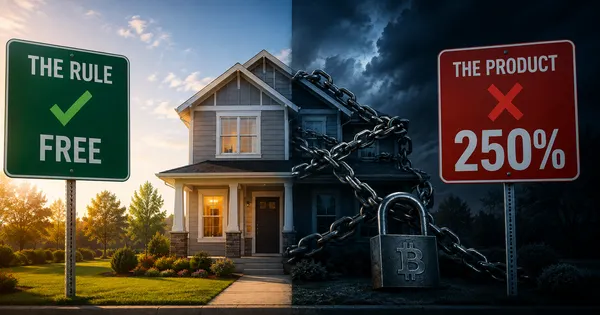
Your assets can live on Robinhood Chain. The house doesn’t have to.

Where this stands today

RealOpen does not currently accept native deposits from Robinhood Chain — we don’t issue deposit addresses on it. But Robinhood Chain is an EVM-compatible Ethereum Layer 2 with real bridge infrastructure, which means assets there are often one hop away from networks we do support. Where a legitimate conversion path exists, the rest is a normal RealOpen transaction: institutional conversion to USD, a wire to escrow, and a conventional closing.

  • Robinhood Chain asset → bridge / swap where available
  • RealOpen-supported asset on a supported network
  • Institutional conversion → USD → escrow wire
  • Conventional real estate closing — seller gets cash

No seller, title company, or escrow officer needs to accept crypto — or know what an L2 is. See how buying real estate with crypto works for the full model.


What Robinhood Chain Is

Robinhood Chain is Robinhood’s own blockchain: a permissionless, EVM-compatible Ethereum Layer 2 built on the Arbitrum technology stack, settling to Ethereum. Gas is paid in ETH. The public testnet went live in February 2026 and mainnet launched July 1, 2026.

What makes it different from the average L2 is the stated purpose: Robinhood describes it as purpose-built for bringing traditional markets and real-world assets onchain — starting with tokenized stock products and a dollar-stablecoin ecosystem (USDG), rather than yet another general-purpose DeFi chain.

For real estate, that matters for one reason: it puts a new category of wealth into self-custodied, onchain, potentially verifiable form. We wrote about why that’s the interesting half of tokenization in Don’t Tokenize the House. Tokenize the Buyer.

RealOpen logo

How a Robinhood Chain Purchase Could Work

The conversion path, step by step

1. Tell us what you hold

Asset, network, approximate amount, and (if known) the property or market. We evaluate whether a legitimate conversion path exists — not every token qualifies, and we will tell you straight if yours doesn’t.

2. Bridge or swap

Standard assets (ETH, major ERC-20s) can exit Robinhood Chain via its canonical Arbitrum-stack bridge — which carries the standard ~7-day withdrawal window to Ethereum — or via faster third-party routes live on the chain today. The right route depends on the asset and your closing timeline.

  • Canonical bridge: trustless, ~7-day exit to Ethereum
  • Third-party bridges: faster, asset-dependent
  • Onchain swap into a supported stablecoin is often simplest

3. Fund on a supported network

Once your value sits in a supported asset — ETH, USDT, USDC and others, across networks including Ethereum and Arbitrum — the normal RealOpen flow applies: proof of funds, offer, rate lock, transfer.

4. USD to escrow, close as cash

We convert through institutional trading infrastructure and wire the exact USD amount to escrow or title. The closing itself is entirely conventional.

About Tokenized Stocks on Robinhood Chain

Robinhood Chain’s headline product is onchain Stock Tokens — self-custodiable ERC-20 tokens tracking public equities, launched with the chain’s mainnet. Precision matters here, so here is exactly what they are as of publication:

  • Tokenized debt securities issued by a Robinhood entity in Jersey — they provide economic exposure to a stock’s price, not ownership of the underlying shares
  • Offered in 120+ countries, but explicitly NOT to U.S. persons (also excluded: Canada, UK, Switzerland, UAE)
  • Transferable and self-custodiable, with liquidity in onchain venues — unlike the 2025-era in-app tokens on Arbitrum One

Could a tokenized stock position fund a home purchase? Case by case, and only after evaluation. Transfer restrictions, issuer structure, jurisdiction, liquidity depth, and redemption mechanics all determine whether a tokenized security can become an asset our trading infrastructure can accept. Holding one does not mean RealOpen can liquidate it. But the direction is the story: wealth that used to live in a brokerage database is starting to live in wallets — and wallet-held wealth is what the crypto-to-real-estate model was built for. (For the difference between tokenized property and this, see Token vs. Deed.)

Institutional trading desk

Onchain Wealth and Proof of Funds

Verified purchasing power, wherever it lives

RealOpen’s core machinery is proving and mobilizing onchain wealth: cryptographic wallet-ownership verification, lender- and agent-ready proof of funds, institutional conversion, and USD settlement to escrow. Today, self-serve verification covers our supported chains and assets.

As more traditional wealth moves into self-custodied form on chains like Robinhood Chain, that same machinery becomes relevant to a much larger balance sheet. We’re building in that direction deliberately — and we’ll say plainly what we support today versus what requires a conversation.

Have assets on Robinhood Chain and want to buy real estate?

Contact us with the asset or token, the network it’s on, the approximate transaction amount, and the property or market if you know it. We’ll evaluate the conversion and settlement path — and give you a straight answer.

Frequently asked questions