
Crypto Real Estate Terms
From Bitcoin to Tokenization
Essential terms for the diversified investor: from blockchain to brokerage, crypto to closing, wallet to walk-through.
Need deeper insight or more colorful commentary? Check out the RealOpen Blog. To see escrow, title, and settlement mechanics, read the crypto closing process explainer. You can also see buy real estate with Bitcoin and buy real estate with Ethereum, and buy real estate with stablecoins.
Have questions about your specific scenario?
Transaction Process
Trading
Real Estate
Blockchain
Web3
Ready to buy real estate with your digital assets?
Latest Commentary and Updates
Commentary, market context, and current updates that complement the core guides, definitions, and process resources in the library.
by Johnny Schiro
4 min read

Your Bitcoin Is Now Their IOU
The branded crypto mortgage disclosed the part the launch coverage skipped: pledged bitcoin can be rehypothecated, stays locked until the entire conforming loan is repaid, and can be sold after 60 days late. The rule underneath still asks none of that.
by Johnny Schiro
3 min read
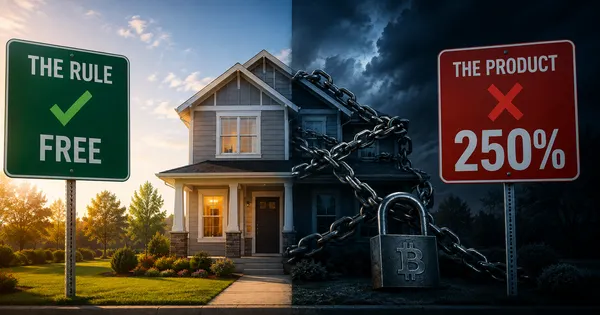
The 250% Fine Print on Crypto Mortgages
Every crypto mortgage headline is about one branded product: two loans, a second lien, 250% of your down payment pledged in bitcoin. The rule underneath is free and works with any lender — no pledge, no parking coins on an exchange. Know the difference.
by Johnny Schiro
4 min read

Don't Tokenize the House. Tokenize the Buyer.
A decade of trying to put houses onchain produced a rounding error. Robinhood Chain suggests the real shift is the other side of the transaction: the buyer's balance sheet. What happens to real estate when wealth itself becomes onchain and verifiable?
by Johnny Schiro
2 min read

Tokenized Real Estate Is Still 0.1% of Everything
A decade of trillion-dollar projections, a market share you need a microscope to find — and what crypto buyers should do instead.
by Johnny Schiro
2 min read

Agents: The TRON x RealOpen Real Estate Challenge Is Live — And the Spotlight Is Massive
Compete for massive exposure on the global TRON ecosystem. Stack points, climb the leaderboard, claim the spotlight.
by Johnny Schiro
2 min read

Fast Moves, Fast Payments: The TRON x RealOpen Holiday Campaign Is Live
Buy a home with crypto and get paid for it. RealOpen + TRON just launched a holiday campaign giving buyers up to 10,000 USDT for funding their closing with USDT on TRON.
by Johnny Schiro
3 min read
The Pivot Year for Crypto Wealth
Crypto wealth is towering over an opportunity-rich real estate market. Stack sats, then stack asset classes.
by Johnny Schiro
3 min read

The 2025 Crypto Real Estate Revolution
In 2025, crypto is quietly absorbing real estate. Tokenization, crypto-backed mortgages, and on-chain closings are real. Wall Street is building its evil twin chain. RealOpen is powering the real utility crypto was promised to deliver.
by Johnny Schiro
3 min read
Grant Cardone Launched a Bitcoin Real Estate Fund. Let's Juice It.
The new fund is flipping real estate into crypto exposure, creating the most boomer-friendly on-ramp Web3 has ever seen. Let’s unpack the madness and add a little juice.
by Johnny Schiro
2 min read

Buying a home with crypto in 2025
RealOpen delivers real-world closings—today. Buy any home with Bitcoin, Ethereum, Solana, XRP, or other major crypto. No gimmicks. Just crypto in, fiat out, keys in hand.
by Johnny Schiro
2 min read

The SEC’s Crypto Case Dismissals: What It Means for Real Estate Transactions
The SEC’s case dismissals are more than legal drama—they’re reshaping crypto. With regs easing, buying real estate with crypto is smoother than ever. RealOpen turns digital assets into cash offers, making every listing crypto-friendly (whether the seller knows it or not).